


Badugi is a unique and exciting poker variant that differs significantly from traditional forms like Texas Hold’em or Omaha. It’s a draw poker game where the objective is to make the best four-card hand with all different suits and ranks. Here’s a comprehensive guide to understanding and playing Badugi.
1. The Basics of Badugi Poker
Objective: The goal in Badugi is to make the best low hand with four cards of different suits and different ranks.
The Deck: A standard 52-card deck without jokers is used.
Players: Badugi can be played with 2 to 8 players.
2. The Setup
Ante or Blinds: Depending on the house rules, players either place an ante or blinds before the cards are dealt to seed the pot.
Dealing: Each player is dealt four cards face down.
3. The Betting Rounds
First Betting Round (Pre-Draw): After the initial deal, the first betting round begins with the player to the left of the dealer. Players can call, raise, or fold.
First Draw: Players can now discard any number of their cards and draw new ones to improve their hand. Players may also choose to “stand pat” if they are satisfied with their current hand.
Second Betting Round (Post-Draw): Another round of betting follows the first draw, starting with the player to the dealer’s left.
Second Draw: Players can again discard and draw new cards.
Third Betting Round: A third round of betting occurs after the second draw.
Third Draw: Players have one final opportunity to discard and draw new cards.
Final Betting Round: The fourth and final betting round takes place after the third draw.
Showdown: If more than one player remains after the final betting round, a showdown occurs. Players reveal their hands, and the player with the best Badugi hand wins the pot.
4. Hand Rankings in Badugi
In Badugi, the hand rankings are quite different from traditional poker games. The best possible hand, known as a “Badugi,” consists of four cards of different suits and different ranks. Here are the hand rankings from best to worst:
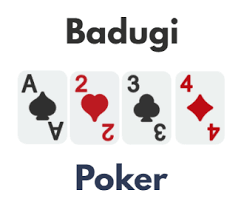
- Four-Card Badugi: Four cards of different suits and ranks. The best possible Badugi hand is 4-3-2-A (all different suits).
- Three-Card Hand: If no player has a Badugi, the best three-card hand wins. Three cards of different suits and ranks.
- Two-Card Hand: If no player has a Badugi or a three-card hand, the best two-card hand wins.
- One-Card Hand: If no player has a Badugi, a three-card hand, or a two-card hand, the best one-card hand wins.
The key is that the lower the cards, the better the hand, and duplicates in rank or suit disqualify cards from being considered.
5. Strategies for Badugi Poker
Hand Selection: Choose starting hands carefully. A hand with three low cards of different suits is a strong starting point.
Observation: Pay attention to how many cards your opponents are drawing. This can give you clues about the strength of their hands.
Betting: Use betting strategically to force opponents to fold. If you have a strong hand, bet aggressively.
Bluffing: Bluffing can be effective in Badugi, especially if you can make your opponents believe you have a strong hand when you stand pat.
Patience: Badugi requires patience. Wait for strong hands and favorable draw opportunities before committing too many chips to the pot.
Conclusion
Badugi is a fascinating and strategic poker variant that offers a refreshing change from traditional poker games. By understanding the rules, hand rankings, and implementing the right strategies, you can become a formidable Badugi player.